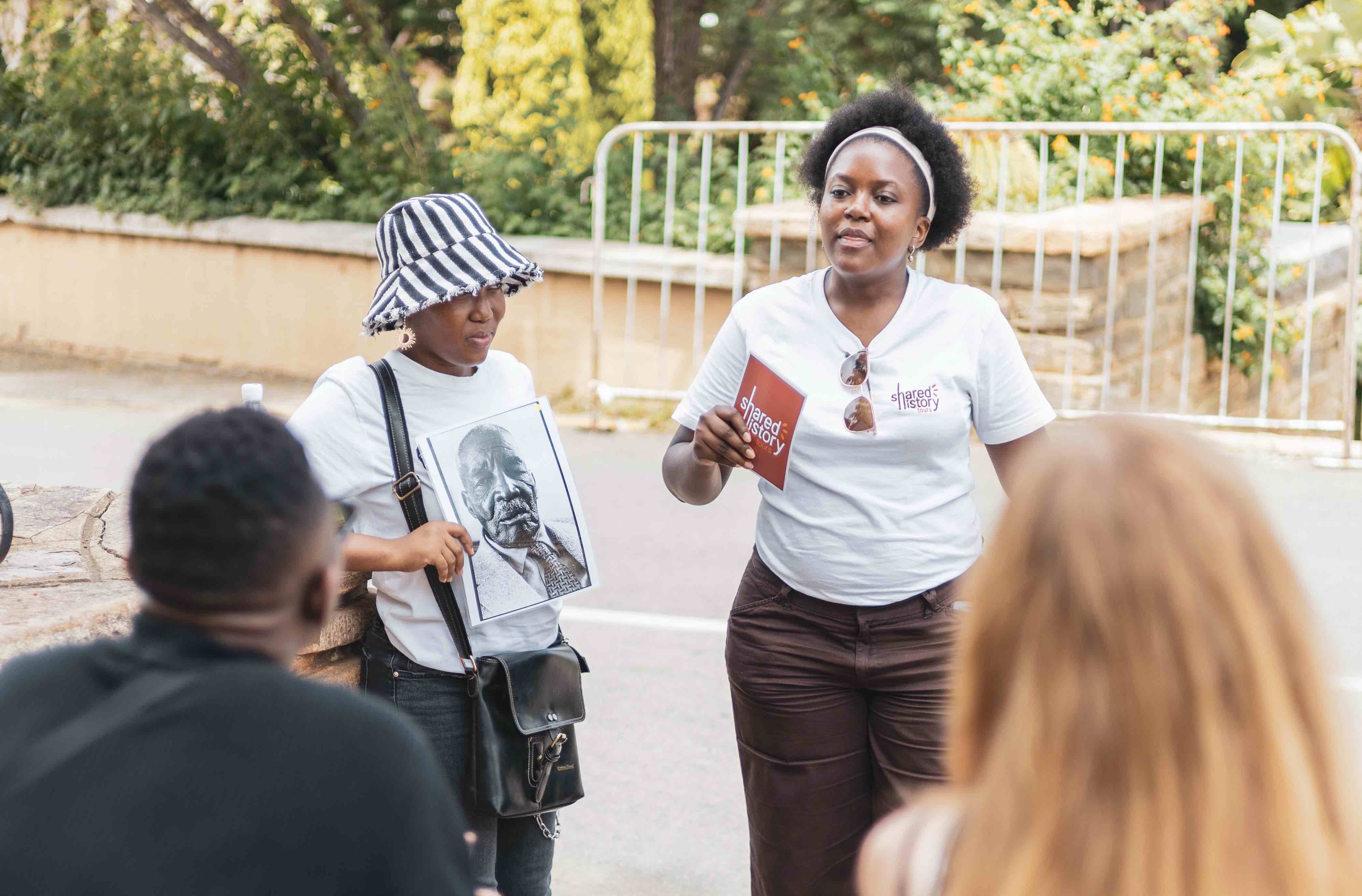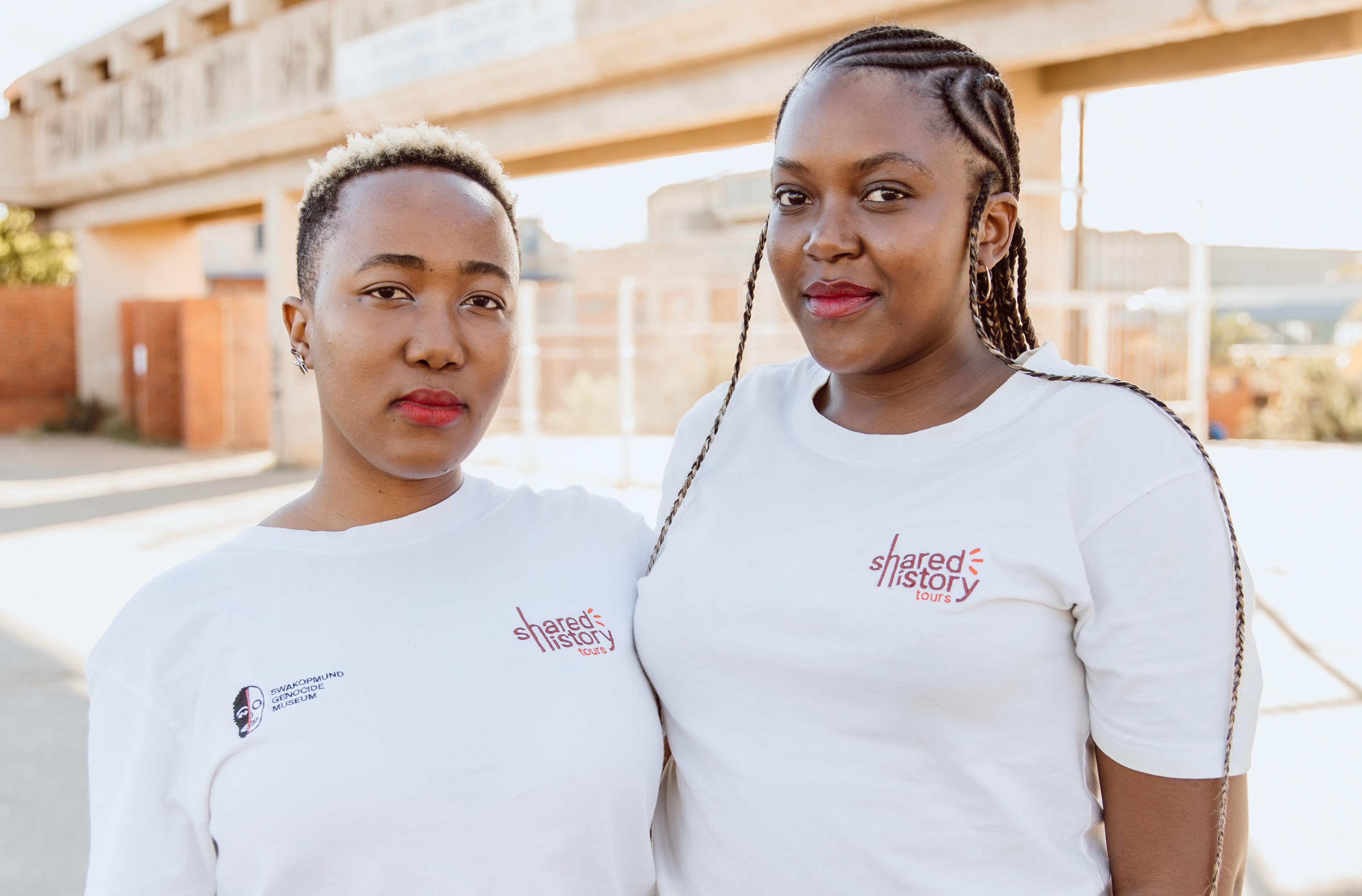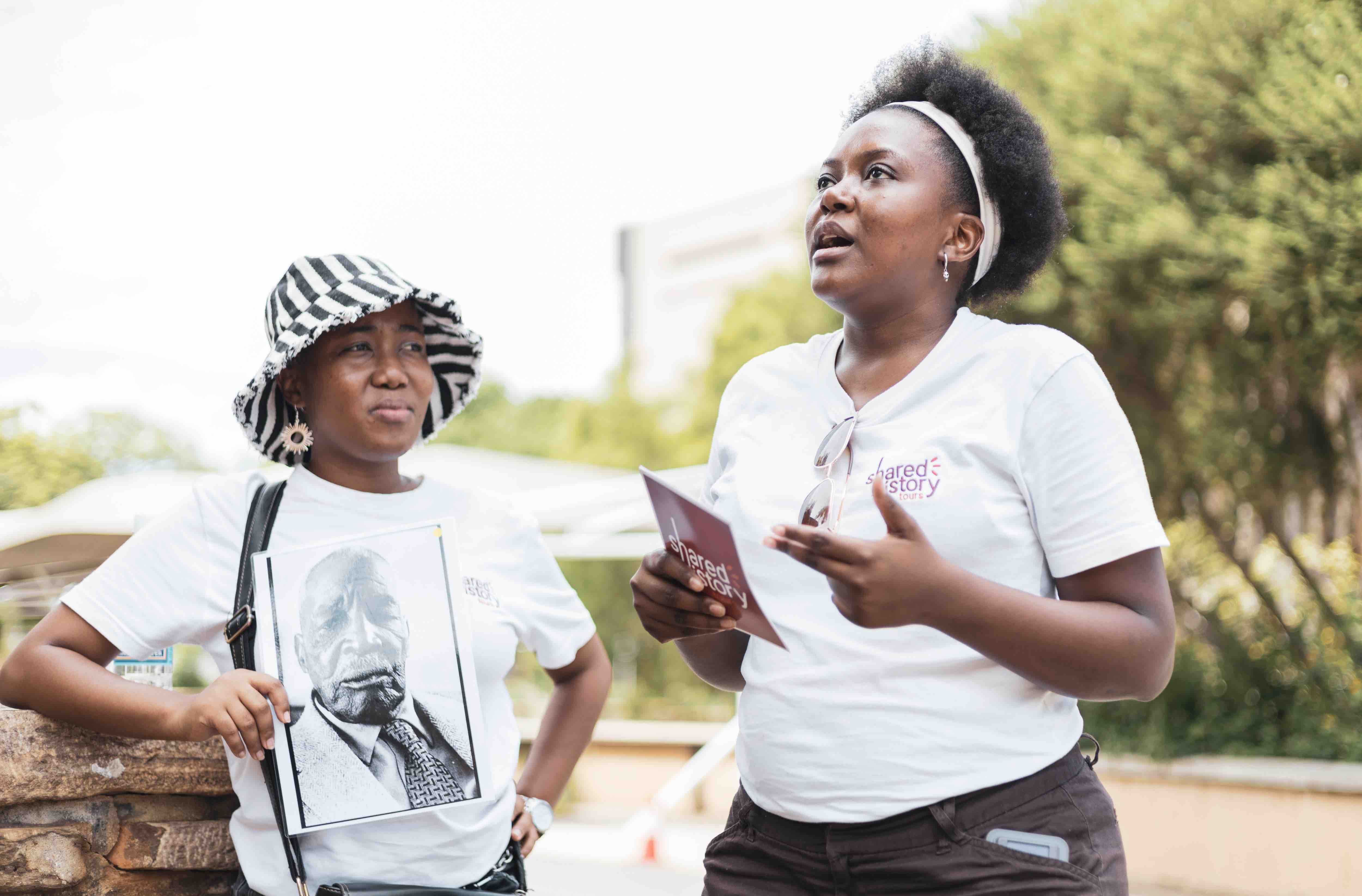

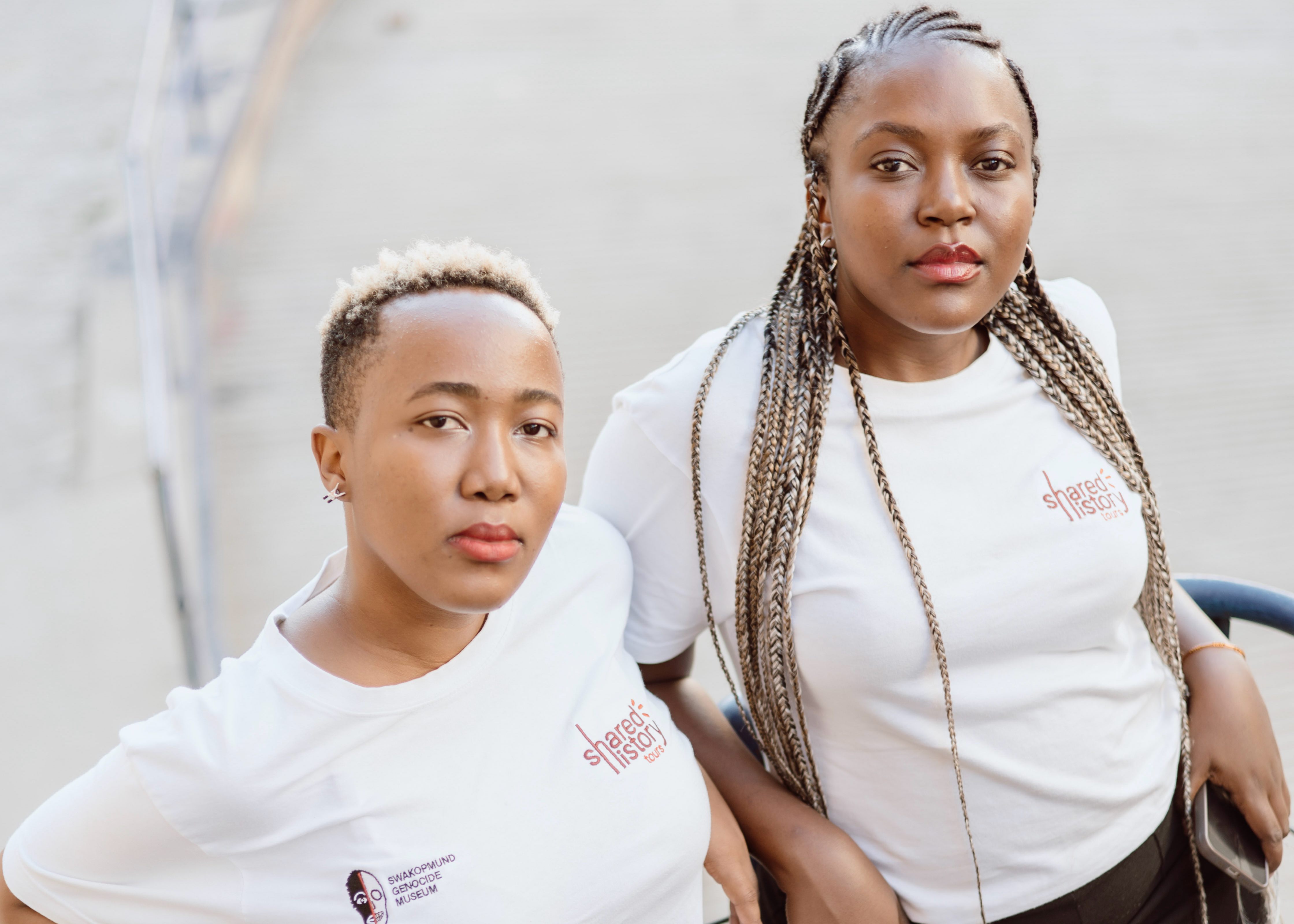
Rikumbi: I really liked the name itself – Shared History. A lot of visitors already know the European side of history, but they rarely hear directly from the people affected by it. The tours create space for our own family histories and experiences, and that’s what I really like about guiding – I get to tell my story too.
Ningiree: Before joining Shared History Tours, I worked with Laidlaw Peringanda at the Swakopmund Genocide Museum as a guide and manager. I’m also an activist, so I was looking for something that aligns with the message I want to share and the work I was already doing.
When I met Theresa and heard about Shared History Tours, it immediately felt like a good fit. The tours allow us to tell history from our own perspective while giving people a broader understanding of Namibia’s past and how it still affects people today.
Rikumbi: I would say the main difference is oral history. Most people who come here get the textbook version of history. But with our tours, there’s a more personal and emotional connection. We don’t only speak about written history; we also speak about the history passed down through our ancestors and our own lived experiences. Of course, the tours are well researched and historically accurate, but what makes them special is that personal connection.
Ningiree: What makes our tours special is that they are very well researched and documented, while also including oral accounts from activists, experts and people who have lived through parts of this history themselves. Another important aspect is that we tell the story from our perspective. Another important aspect is that we tell the story from our own perspective. Rikumbi and I come from communities directly affected by colonialism, genocide and apartheid. Even though the genocide happened more than 120 years ago, we also show how this history still shapes Namibia today.
During the tour, we connect the past to the present and show how colonialism and apartheid shaped inequality, segregation and life in places like Katutura today. There’s also the cultural side of the tour, sharing food at the Kapana market, conversations with people and experiencing Windhoek beyond just the historical sites.
Rikumbi: People should join our tours because the information is well researched, but also because there’s a personal connection to the history we are sharing. For us, this is not just a job, it’s something we genuinely care about. We don’t only teach history; we also teach culture. We explain why certain traditions changed because of colonialism and apartheid and why Namibia is the way it is today.
The tour helps people understand how history still shapes daily life.
Ningiree: Many tours mainly focus on historical facts, while our Freedom Fighter Tour also highlights resistance. We want people to understand that Namibians were not just passive victims. People were resisting, protesting and fighting back.
We also highlight many important people and stories that are often left out of conversations about Namibia’s history. These stories of resistance also help people better understand how Namibia eventually reached independence.
Rikumbi: Yeah, let me add to that point as well. Our tours also show the different layers of resistance, because many people mainly focus on the violence and the wars that happened. But resistance also took many other forms, through education, art and protests. I can’t give away everything right now, you’ll have to join the tour for that [laughs].
We also talk about the people who were organizing, protesting and resisting in other ways, stories that are often left out of history.
Rikumbi: It may feel like history from long ago, but colonialism still shapes many of the systems and structures we live with today. You need to understand history so that the same mistakes are not repeated. History teaches lessons, and if we ignore those lessons, we risk repeating the same problems again.
Ningiree: I think it’s important to travel with context. You can look at a monument or a beautiful building, but without understanding the history behind it, you don’t fully understand the place you are visiting. Many monuments and historical sites in Namibia are not contextualized. People see them, but they don’t always know what happened there or what those places represent.
Once you understand the history, you begin to understand why certain towns look the way they do, why inequalities still exist and how many places in Namibia are connected to displacement, colonial violence or apartheid. History helps people understand where they are traveling and appreciate the country on a much deeper level.
Rikumbi: Honestly, the merch and the uniforms. We don’t have to do too much laundry [laughs].
But seriously, my favorite part is meeting different people and seeing those “light bulb moments” during the tour, when people suddenly understand why things are the way they are today.
I like opening people’s minds and expanding their perspectives. That’s my favourite part of guiding.
Ningiree: And the coffee. Definitely the coffee [laughs].
Jokes aside, I also really enjoy the fact that anybody can learn from the tours, not only international visitors, but Namibians too. People always leave having learned something new. And sometimes we also learn from the people joining the tours. Some guests already know certain parts of the history, which leads to really interesting discussions.
Bringing together people from different cultures and perspectives is one of the most interesting parts of guiding. Sharing knowledge and learning from each other is really special.
The interview was conducted by Theresa Mertens