By Ningiree Kauvee and Rikumbi Kandanga
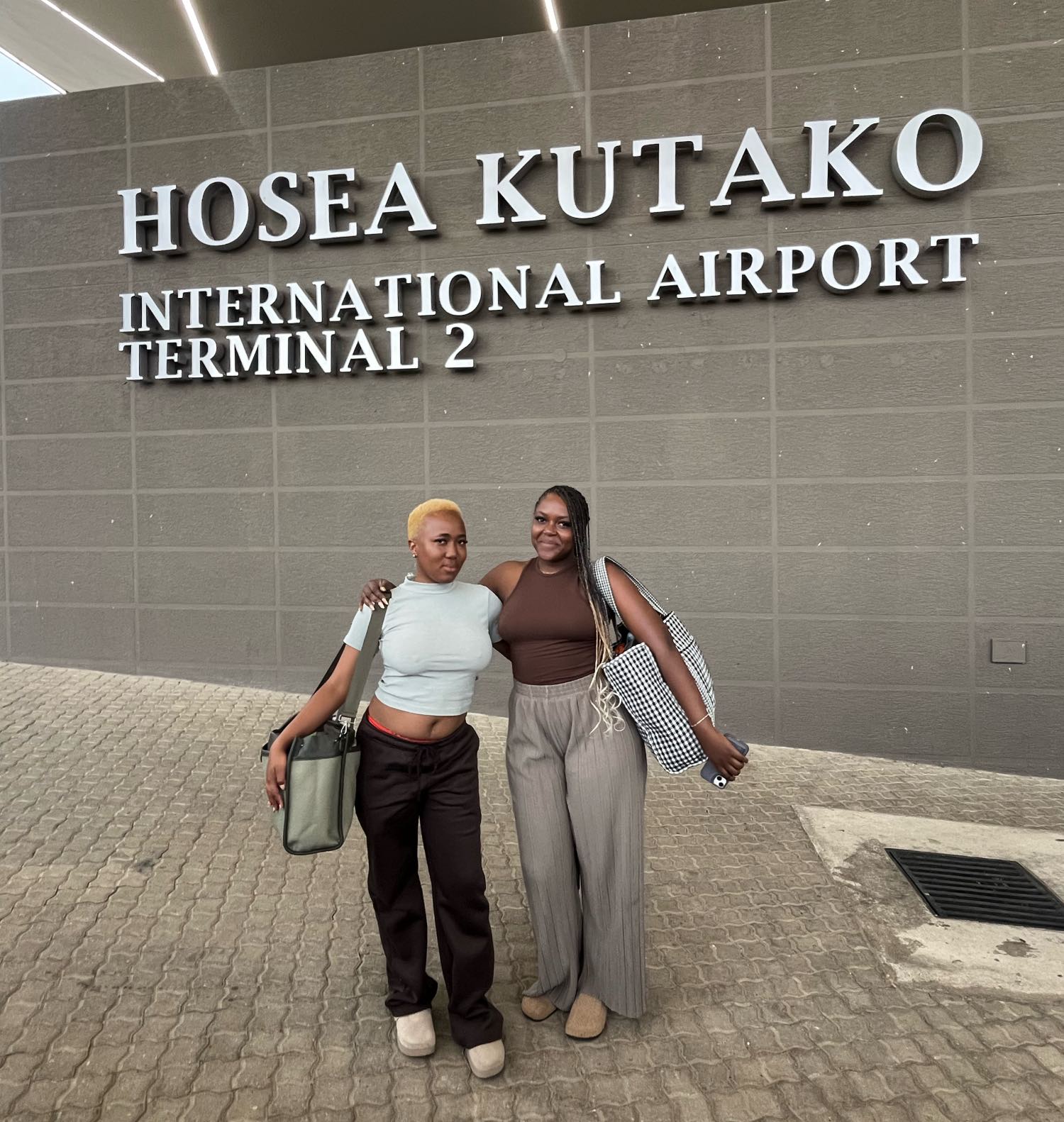
Our work as guides at Shared History Tours usually brings us together with visitors in Namibia. In October, the Wikipedia for Peace: Remembering Genocide exchange programme brought us to Switzerland. From 2 to 9 October 2026, we were in Bern, learning, writing and sharing experiences with young people from Namibia, Palestine, Poland and Switzerland.
After the exchange, we travelled to Geneva, where we stayed from 10 to 13 October. Our time in Switzerland also included visits to museums in both cities, where we encountered cultural belongings from Namibia and reflected on how our histories are documented, remembered and shared.
The Wikipedia for Peace programme, organised by SCI Switzerland in partnership with the OvaHerero People’s Memorial and Reconstruction Foundation (OPMRF), centred on learning how to write, edit and translate Wikipedia articles on genocide and genocide prevention. We explored how to identify reliable sources, check information and improve existing articles.
It was also an opportunity to understand how knowledge is produced, who gets to contribute to it and whose histories remain absent from the spaces where information is shared. We also learned about ways to document and share oral histories, rather than simply disregard them.
One of the most profound aspects of the exchange was being in a room with people from countries and communities that have experienced genocide, including participants from Palestine. Although our histories were different, there were experiences of violence, dispossession, persecution and collective suffering that connected us.
It reminded us that genocide is not simply a historical subject to be studied from a distance. For many communities, it continues to shape identity, family histories, collective memory and everyday realities.
Coming from Namibia, where the German genocide against the Ovaherero and Nama people between 1904 and 1908 remains an important part of our collective history, we reflected on how much we can learnfrom one another when we create spaces for genuine exchange.
AsI, Rikumbi, reflected: “What stood out to me was the absence of the usual expectation to explain, defend or repeatedly establish the historical experiences of our communities.”
Instead, there was an opportunity to listenand be understood. Sometimes, the value of solidarity is simply being in aspace where your history does not need to be justified before it can beacknowledged.
Although the practical component of the programme focused on Wikipedia, we found ourselves thinking about something much bigger: the importance of who gets to write history.
Our histories are often discussed, interpreted and documented by institutions and individuals far removed from the communities whose experiences they seek to represent. This makes historical documentation particularly important for communities whose experiences have been marginalised or inadequately represented.
These questions stayed with us during our museum visits.
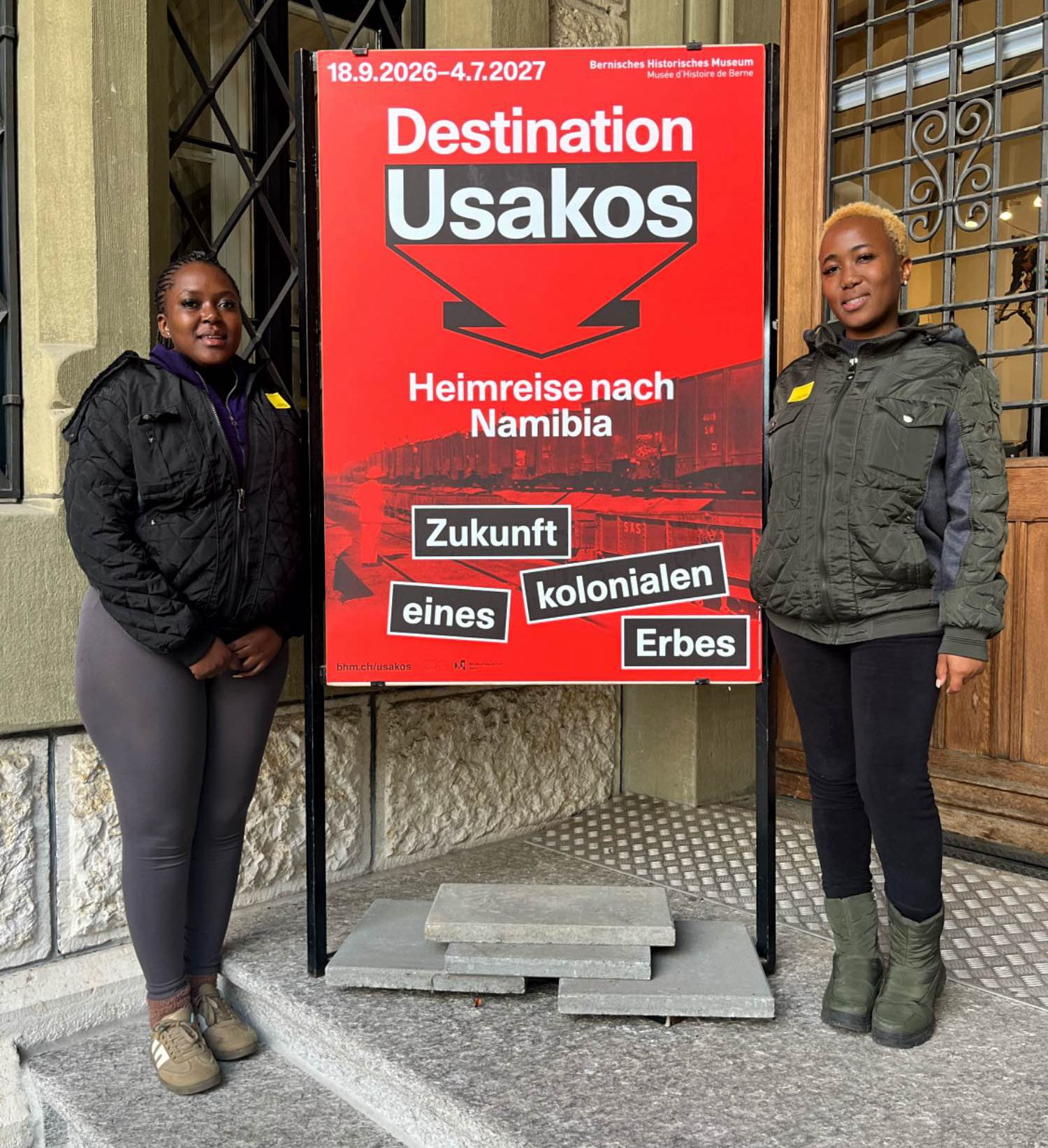
On 9 October, we visited the Bernisches Historisches Museum, where we explored the exhibition Destination: Usakos. Going Home to Namibia. The exhibition featured 286 ethnographic artefacts from Namibia, then under German colonial rule, collected by Victor and Marie Solioz. These objects, which belonged to the everyday lives of Namibian railway workers in the early twentieth century, tell stories of labour, exploitation, identity and cultural heritage. Visiting this exhibition was particularly significant for us. What stood out was how the colonial history was presented: without softening the violence and exploitation, romanticising colonialism or falling into narratives of white saviourism. It was an honest representation that acknowledged both the exploitation of Namibian people and the cultural significance of the objects.
Knowing that these artefacts are to bereturned to Namibia made the visit even more meaningful. For us, this is an important example for other institutions and countries holding our cultural heritage, including objects and human remains. Repatriation is not an act of generosity but a matter of historical responsibility and justice.
Sometimes, going home means more than returning to a place. It means returning what was never meant to leave.
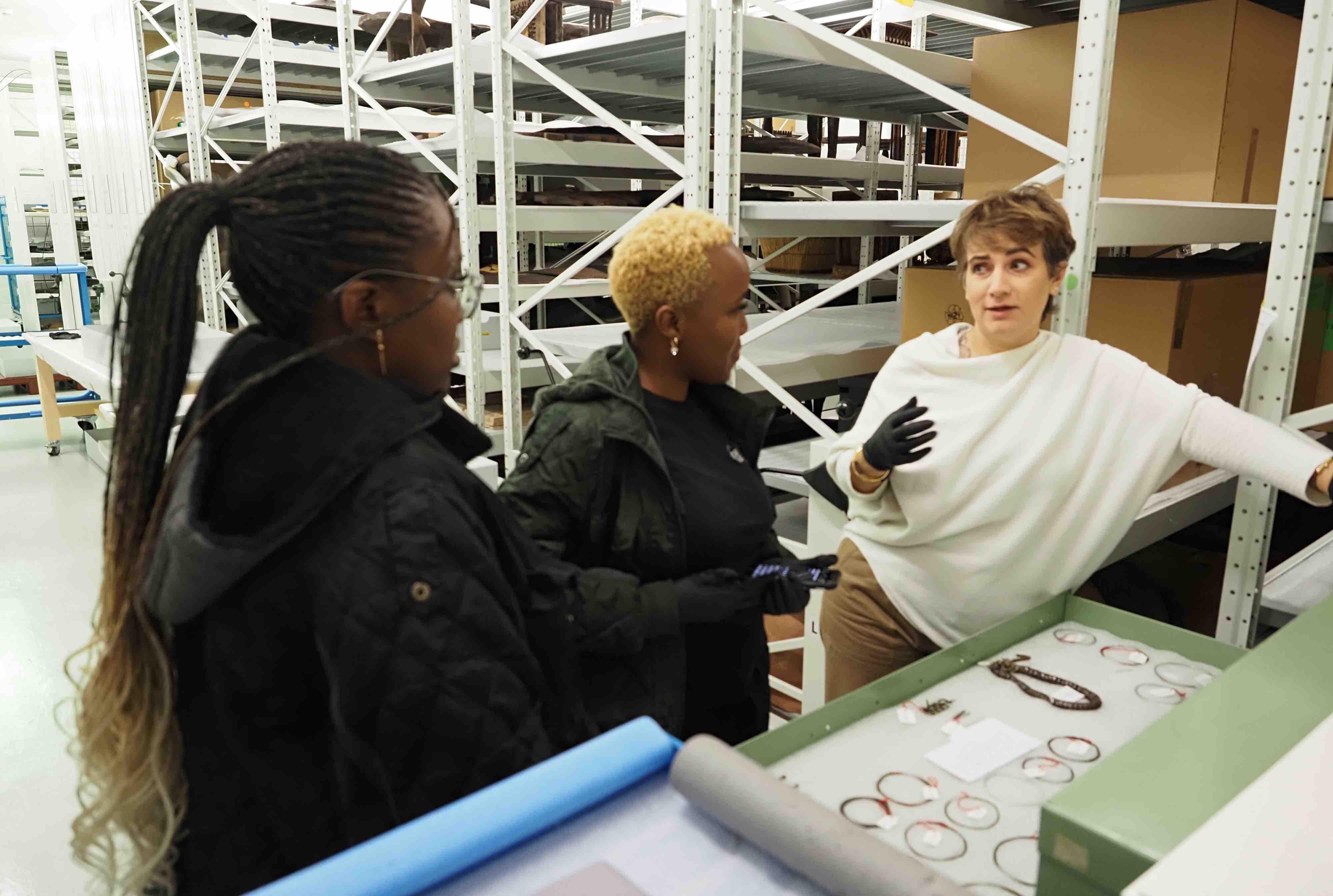
After the Wikipedia for Peace exchange, our journey continued to Geneva. On 12 October, we visited the Geneva Museum of Ethnography (MEG), following an invitation from Philippe Mathez, Curator of the Visual Anthropology Collections.
We had first met Philippe in Namibia, when he joined one of our tours with Shared History Tours. It was through this connection that the opportunity to visit MEG arose.
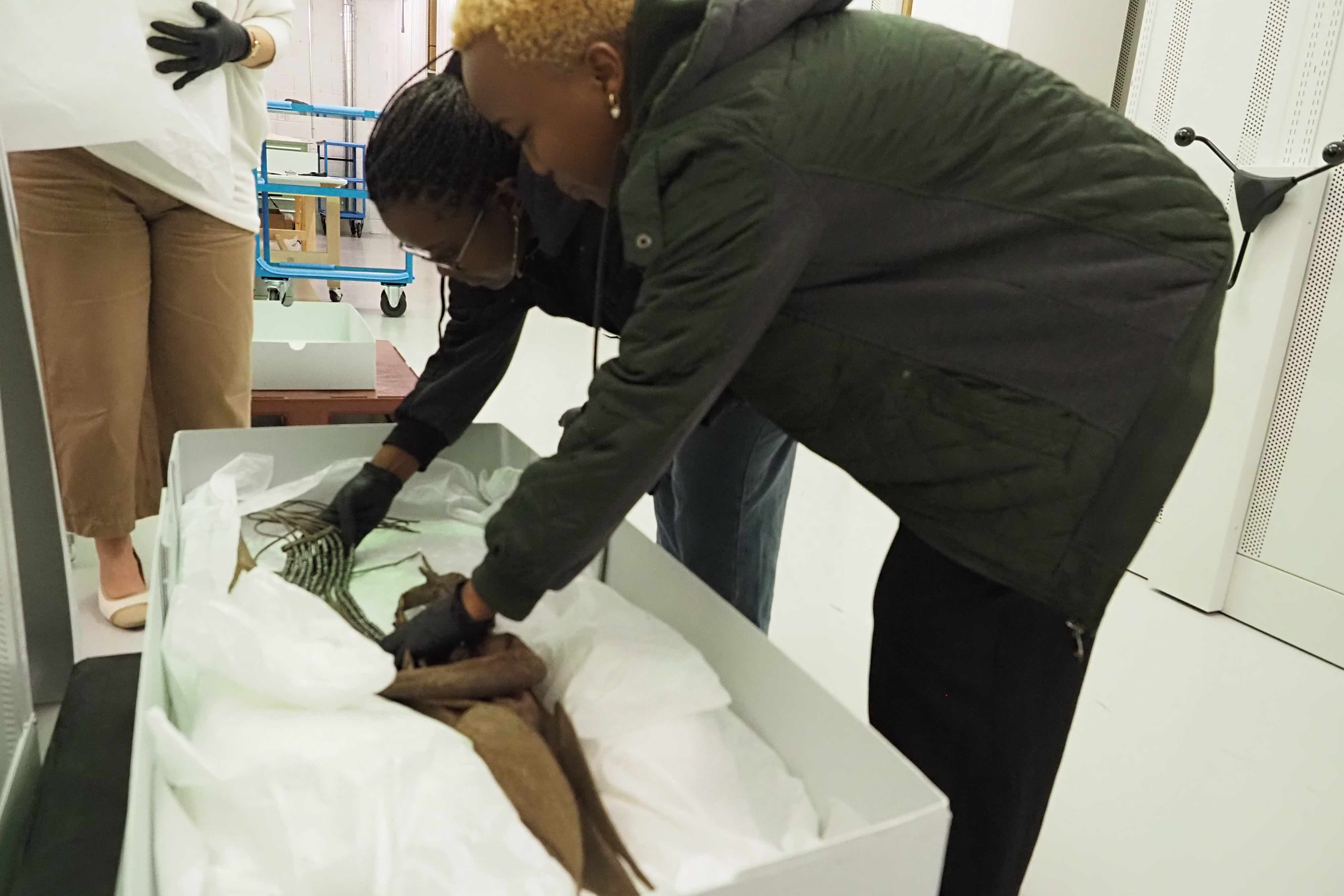
MEG holds approximately 17,000 objects from Africa, including cultural belongings from Namibia. Accompanied by Philippe and Floriane Morin, Curator of the African Collections, we had the opportunity to view objects from the museum’s Southern African collections, including Namibia and Angola.
Some objects were not clearly identified or attributed in the museum’s records. We were kindly invited to share any knowledge or observations that might assist in identifying them. Drawing on ourcultural knowledge, we recognised some objects and were able to suggest that they might have come from certain communities in Namibia.
In this process, we considered more than how the objects looked. We also smelled some of them and looked closely at colour combinations, types of metal, beadwork, shells, bones and other materials. These characteristics offered possible cultural connections that were not always reflected in the museum’s cataloguing or historical documentation.
The question of present day national borders also became important during this process. At the time some of these objects were collected, territorial boundaries differed from those that exist today. This was particularly relevant when examining objects attributed to Angola, some of which appeared to have possible connections with communities in northern Namibia. The geographical labels assigned to objects in museum collections therefore do not always fully represent the cultural identities and histories of the communities from which they originated.
One of the most significant aspects of this experience was seeing objects that were more than a century old and noticing features familiar to us. Although cultural practices have evolved, sometimes considerably, knowledge of certain materials, designs and practices has been transmitted across generations. These possible connections reminded us of the importance of cultural continuity and the role of elders in preserving and passing down knowledge.
However, there were also objects that left us with unanswered questions. One example was a necklace made from bones and attributed to the Ovaherero community. Although its cultural attribution was recorded, we could not establish which bones had been used or fully explain the necklace’s purpose and significance. This highlighted the need for further research and showed that familiarity with some features does not mean that every aspect of an object’s history is understood.
Encountering these objects also raised questions about cultural change and the ways in which practices are remembered, reinterpreted or lost over time.
A practice that existed within a community more than a century ago may be understood very differently today. For instance, wearing a necklace made from bones might now be viewed negatively or associated with witchcraft, despite having formed part of an earlier cultural practice. This raises questions about how contemporary interpretations can influence our understanding of the past.
What are we allowed to remember? What do we get to remember? Which practices have evolved, which have been taken away and which have been lost?
These questions became particularly significant when considering the distance between the objects’ historical contexts and the communities that might encounter them today.
The experience reinforced the importance of cultural preservation, not simply as the safeguarding of physical objects, but also as the continued passing on of the knowledge, meanings and practices associated with them. An artefact may remain in a museum for generations, but without the cultural knowledge required to interpret it, important parts of its history risk becoming inaccessible.
A substantial part of the Namibian objects held by MEG comes from the collection assembled by Victor Solioz, a Swiss railway engineer involved in constructing the Otavibahn during German colonial rule. His name was already familiar to us from the exhibition in Bern.
The collection comprises approximately 250 objects, of which around 70 have been identified as Herero and Nama. However, the museum’s records indicate that some of these identifications remain uncertain, both in the original historical documentation and in more recent attributions.
One of the objects is an Ekori, a traditional Herero women’s headdress dating from before 1906. Made from leather and iron, it was acquired by the museum from Marie Solioz in 1921 and is recorded as part of the former Victor and Marie Solioz Collection. The circumstances of its creation and how it came into the collection are not documented.
The history of this collection cannot be separated from the colonial violence that took place in Namibia. Between 1904 and 1908, the German Empire carried out the genocide against the Ovaherero and Nama peoples. During this period, European demand for Namibian cultural objects increased.
The Solioz couple are believed to have acquired their collection in bulk. As noted in MEG’s 2024 exhibition, Memories: Geneva in the Colonial World, the dating of certain objects brought back from Namibia by Victor and Marie Solioz in 1906 leaves little doubt about the violent colonial context in which they were acquired.
These objects therefore carry histories that extend beyond their materials or appearance. They are also connected to the conditions of colonial occupation, dispossession and violence under whichcultural belongings were removed from their communities.
After viewing the collections, we held a closed meeting with members of the museum team. The discussion focused on the genocide and its historical and contemporary implications. We reflected on what happened during the colonial period, how these events continue to affect communities today and how colonial violence manifests itself in the present.
It was a particularly powerful exchange. The discussion created space to consider the relationship between museum collections and the lived experiences of communities whose histories andcultural belongings are represented within them. It also allowed us to consider the wider responsibilities involved in preserving, interpreting and presenting collections connected to colonial violence.
The museum also holds other collections connected to Namibia. These include a collection assembled by ethnologist Carlos Valiente-Noailles during the 1980s, consisting of nearly 150 objects, primarily associated with Himba and Kua communities in Namibia and Botswana. Unlike some of the older collections, these objects are accompanied by more extensive documentation and photographic records.
Another important issue concerns the humanremains collection assembled by physical anthropologist Eugène Pittard. Following the separation of the Institute of Physical Anthropology from MEG, this collection was transferred to the University of Geneva in 1967. It remains possible that human remains originating from Namibia are held within this collection. Research is underway to establish whether such remains are present and to determine their whereabouts.
Across the exchange and our museum visits, we kept returning to questions of who gets to document history, whose knowledge is recognised and how communities can shape the telling of their own stories.
Seeing cultural belongings far from home reminded us of what can survive across generations. The questions we could not answer also reminded us of how much knowledge may have been interrupted, transformed or lost, and how important it is for communities to be part of understanding these collections.
Perhaps the most important lesson we took from Switzerland is that our histories may be different, but we do not have to carry the responsibility of remembering them in isolation.
We write because histories have been erased. We remember because people have been forgotten. We listen because no community should have to tell its story alone.
And we continue because remembrance is not simply about looking back. It is also about deciding what kind of future we want to build.
We came with our histories. We left carrying each other’s stories.
Listen to Theresa Mertens' and Jana-Marie Backhaus-Tors' conversation on the Exploradio Namibia Podcast
Read Theresa Mertens' latest INDABA Magazine article exploring how community-led city tours create...
Today, Namibia commemorates the 100,000 people who perished during the first genocide of the 20th century.
An Interview with our Windhoek guides on why colonial history matters...
The massacre against the Witbooi Nama is still commemorated by Nama communities today.